
Transportation and Housing: AAA Partnerships That Support Older Adults and People with Disabilities
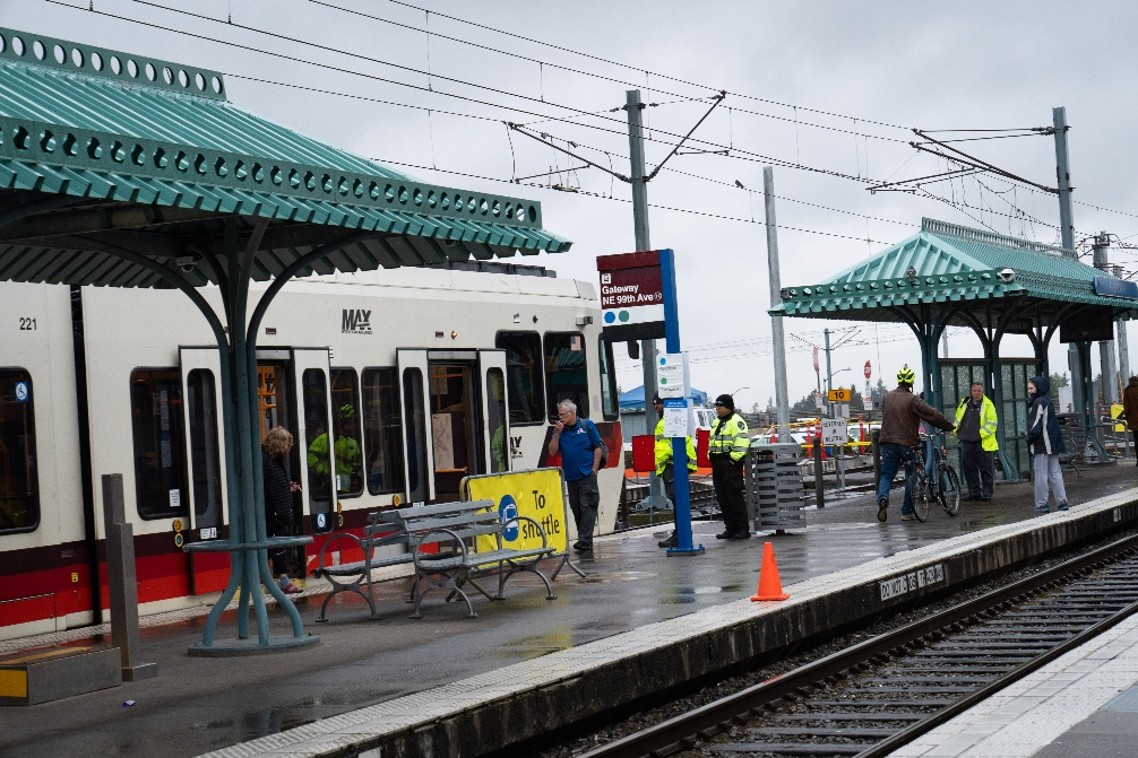
Photo Credit: Ride Connection, Portland, OR
According to the U.S. Census Bureau in September 2025, one-third of all households spent more than 30 percent of their income on housing. Their second-highest expense, according to the Bureau of Labor Statistics, was for transportation, for which older adults spend roughly 16 percent.
In this high-cost environment, data from USAging’s National AAA Survey in 2025 reveals the vital role that AAA transportation and housing programs play in supporting the desires of older adults and people with disabilities to age in place. Ninety-one percent of AAAs provide transportation services, and 88 percent provide housing or homeless prevention-related services. In fact, 94 percent of AAAs identified housing as a high priority, and 55 percent of AAAs say they have an unmet need for subsidized housing for older adults.
Consider, then, the important role of transportation in supporting older adults and people with disabilities who live in or seek affordable housing. Whether in urban, suburban or rural areas, these individuals need access to medical appointments, healthcare, food, and other activities to stay engaged in the community. AAA transportation programs provide this vital link for many of these individuals.
Federal agencies are increasingly recognizing the synergy of housing and transportation working together. This is reflected in several federal funding programs, including:
- Choice Neighborhoods Planning Grants—U.S. Housing and Urban Development (HUD) offers planning grants to eligible local governments and nonprofits that are revitalizing public housing or HUD-assisted housing projects. HUD communities may use a portion of Choice Neighborhood funds for transportation-related costs, e.g., to remove barriers to employment and critical services for housing residents. These expenses may include bus passes, ride-sharing services or gas vouchers, if no other funds are available.
- Community Development Block Grants (CDBG)—HUD distributes CDBG to local communities through formula-based grants. These funds target low-and moderate-income areas for housing, infrastructure, and development, which can include transportation.
- Continuum of Care—Governmental entities and nonprofits are eligible to apply for Continuum of Care funds through HUD for efforts to end homelessness. These grants may allow for transportation support under supportive services that help program participants obtain and maintain housing.
- Resident Opportunities and Self-Sufficiency (ROSS)—Transportation programs may be able to access ROSS funds to help cover the cost of rides for HUD-assisted residents who participate in ROSS.
- Service Coordinators in Multifamily Housing (SCMF)—HUD provides grants to owners of HUD-assisted multifamily housing (e.g., Section 202) to employ service coordinators, those whom some AAA’s may refer to as navigators. In addition, the Office of Public and Indian Housing (OPIH) within HUD funds service coordinators for residents in public housing, and many of these residents are older adults. These funds may be eligible for braiding, for example, if mobility management positions within your agency also provide residential or on-site service coordination or housing navigation services.
For additional details on HUD and other grants that may meet match requirements for transportation, visit the Coordinating Council on Access and Mobility Technical Assistance Center (CCAM-TAC) website, which has published a Federal Fund Braiding Guide.
In recent years, both federal and state legislation have helped pave the way for more housing located near transit hubs. Legislation, known as the Build HUBS Act (H.R. 7062) was introduced in January 2026. Such legislation supports transit-oriented development (TOD), a planning strategy that promotes high density, mixed-use (residential and commercial) development near transit hubs while prioritizing affordable housing. Currently, more than half of all states have adopted this strategy. Efforts like H.R. 7062 enable HUD and U.S. Department of Transportation (USDOT) to collaborate and prioritize TOD projects, coordinating with Metropolitan Planning Organizations (MPO) to align with existing MPO- or state-developed plans.
AAAs may have opportunities to participate in regional discussions to support housing for older adults with transportation. For example, AAAs can:
- Comment at public meetings.
- Educate state and community leaders about older adults’ need for transportation services that are accessible from their homes.
- Share data from their service area with housing developers.
- Participate in housing and transportation coalitions.
PROFILES
The profiles that follow offer three different strategies from AAAs for addressing the duality of transportation and housing in creating livable communities for older adults and people with disabilities.
- Area Agency on Aging (AAA) of Northwestern Ohio, Toledo, OH
- Seattle Human Services Department Aging and Disability Services, Seattle, WA
- Area Agency on Aging of Western Arkansas, Fort Smith, AR
RESOURCES
- The Cost of Home Ownership Continues to Rise. U.S. Census Bureau, Sept. 11, 2025
- Federal Fund Braiding Guide. CCAM-TAC
- Federal Transit Administration
- Housing and Services. USAging
- Housing and Services Resource Center. Administration for Community Living
- Transportation and Mobility. USAging
- U.S. Department of Housing and Urban Development
- USAging 2025 Chartbook. USAging